Myth
Egg myths · 3 min read
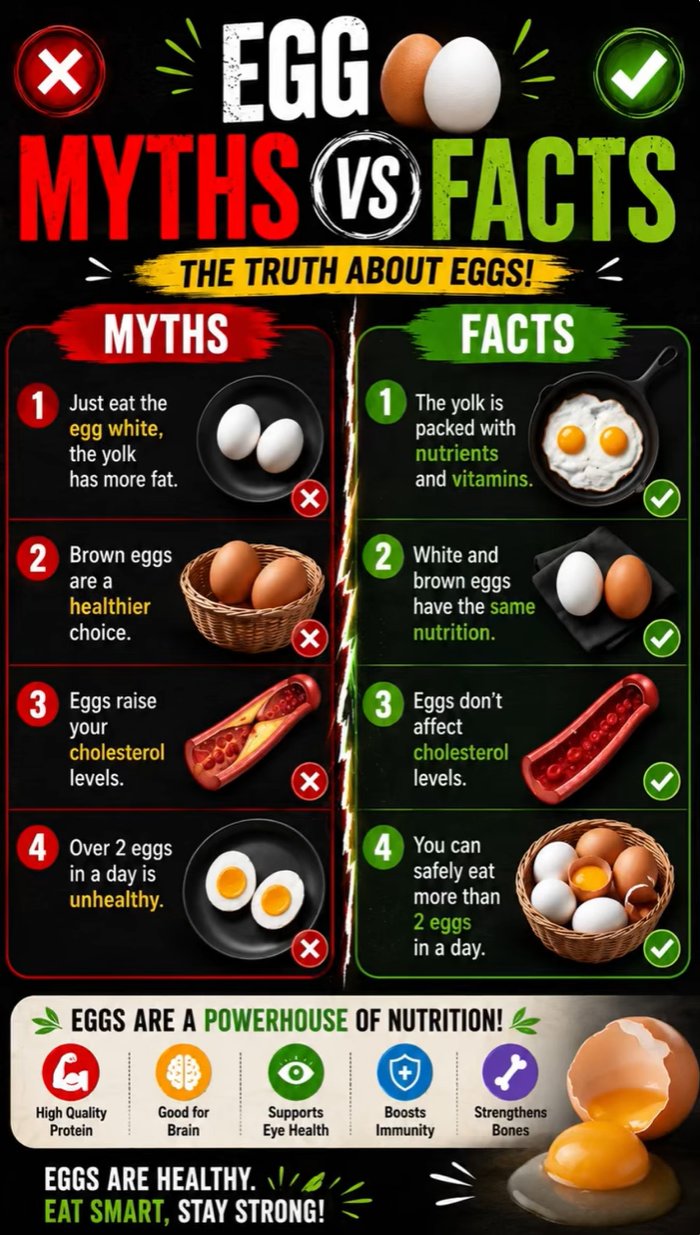
"Brown eggs are healthier than white eggs."
Not true. Shell color comes down entirely to the breed of hen, not nutrition or how the hen was raised. A brown egg and a white egg from hens with identical diets and living conditions are nutritionally the same. Brown eggs are often priced higher, but that's a market perception, not a nutritional fact.
Myth
Egg myths · 3 min read
"You should avoid eggs if you're watching your cholesterol."
This was standard advice for decades, but it's been substantially revised. For most people, dietary cholesterol has a smaller effect on blood cholesterol than saturated fat does, and current U.S. dietary guidelines no longer set a strict daily limit for the general population. Some individuals are more sensitive to dietary cholesterol than others, so this is genuinely worth a personal conversation with a doctor — but "eggs are universally bad for cholesterol" is an outdated blanket claim.
Myth
Egg myths · 3 min read
"A double yolk means the egg is fertilized or unsafe to eat."
Double yolks have nothing to do with fertilization. They happen when a hen's reproductive cycle releases two yolks close together and they end up packaged in the same shell — most common in younger hens whose laying cycle hasn't fully regulated yet. Double-yolk eggs are completely safe to eat and cook the same as any other egg, just with more yolk relative to white.
Myth
Egg myths · 3 min read
"You shouldn't eat raw or runny eggs, ever."
The real risk with raw or undercooked eggs is salmonella, and it's genuinely worth taking seriously — but it's also a manageable risk, not an absolute rule. In the US, pasteurized eggs are specifically treated to eliminate that risk and are safe to eat raw or runny. Standard fresh eggs from a reputable, well-handled source carry a low but non-zero risk, which is why guidance is more cautious for pregnant people, young children, older adults, and anyone immunocompromised.
For most healthy adults, a runny yolk from a fresh, properly refrigerated egg is a normal culinary choice, not a reckless one — the key factors are freshness, proper refrigeration, and who's eating it.
Myth
Egg myths · 2 min read
"Older eggs are lower quality eggs."
Age and quality aren't the same thing. A well-refrigerated egg stays safe and usable for 3 to 5 weeks past its pack date, and — somewhat counterintuitively — slightly older eggs actually peel more easily when hard-boiled than very fresh ones do. "Older" within that safe window doesn't mean "worse," it just means slightly different for certain cooking methods.